United Satrapy of Iran
The fifth iteration of federated governance on the Iranian plateau.
The United Satrapy of Iran is a federal democratic republic occupying the Iranian plateau and its surrounding lowlands. It is the largest and most populous member state of the Middle Eastern Union, and its establishment in the late 2020s was the political precondition for the MEU’s existence. The USI’s governance architecture draws on five thousand years of federated governance experiments on the plateau, from the Elamite Sukkalmah system through the Achaemenid satrapy synthesis, now equipped with digital infrastructure and direct participation mechanisms.
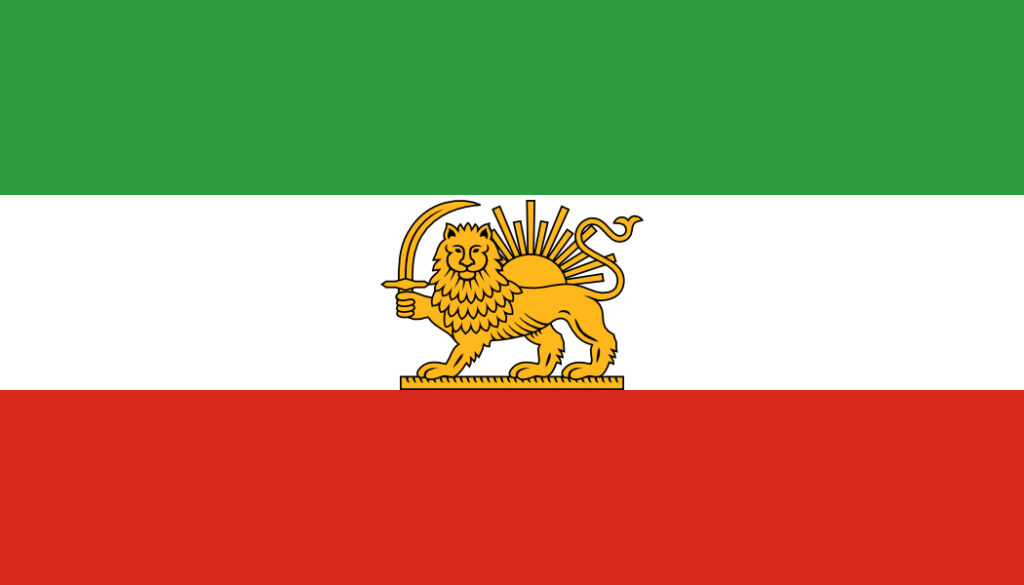
Flag
Official name
United Satrapy of Iran
Government
Federal democratic republic
Capital
Bandar Abbas (political)
Tehran (cultural/economic)
Population
~90 million
Area
~1.65 million km²
Satrapies
14
Currency
Gulf Rial (MEU)
Legislature
People’s Assembly (300 seats)
Satrapal Council (42 seats)
Executive
7-member Federal Executive Council
Name and Symbolism
The word “satrapy” (from Old Persian xšaçapavan, “protector of the province”) deliberately reclaims 2,500 years of Iranian governance vocabulary. The term carries a dual resonance: it references the administrative unit that enabled the Achaemenid Empire to govern diverse peoples across vast geography, and it evokes Marjane Satrapi, the graphic novelist whose Persepolis became the most internationally recognized artistic expression of modern Iranian identity. Satrapi was born in Rasht in 1969 to a politically progressive family. Her surname literally means “of the satrap,” derived from the ancient title with the Persian suffix “-i” denoting origin or relation. The animated adaptation of Persepolis won the Jury Prize at Cannes in 2007 and was banned in Iran. The pairing of governance history with contemporary cultural consciousness signals a system that honors Persian civilizational depth while embracing modern democratic sensibilities.
Formation
The Islamic Republic of Iran collapsed in the late 2020s after the simultaneous degradation of all pillars of regime legitimacy: military deterrence, economic management (the rial, which had traded at 70 to the dollar in 1979, breached 1.5 million to the dollar), ideological authority, and regional influence. The “Woman, Life, Freedom” protests of 2022-2023, triggered by the death of Mahsa Jina Amini, had demonstrated that the regime survived through coercion alone, a historically unsustainable position.
The USI emerged from a constitutional convention process that drew on both international precedents and indigenous governance traditions. The convention faced a fundamental question: what replaces the theocracy? The architects examined every viable model (unitary presidential republic, parliamentary monarchy, ethnic federation, asymmetric federation) and concluded that a federal democratic republic with asymmetric powers was best suited to Iran’s conditions.
Federal Structure
The USI consists of fourteen satrapies, defined by a composite of geography, economics, history, and demographics. The boundaries were never drawn along ethnic lines, a deliberate choice informed by the failures of ethnic federalism in Ethiopia and elsewhere. The satrapies include Azerbaijan (northwest), Kurdistan (west), Zagros (west-central), Khuzestan (southwest), Fars (south-central), Isfahan (central), Alborz (capital region), Khorasan (northeast), Caspian (north), Kerman (east), Baluchestan (southeast), Hormozgan (south), Yazd (central), and Bushehr (southwest).
Each satrapy exercises all powers not explicitly delegated to the federal government. This residual clause, modeled on Swiss Article 3, means the default condition is satrapal autonomy. The system is asymmetric: satrapies with distinct linguistic and cultural identities (Kurdistan, Baluchestan, Azerbaijan) exercise greater cultural autonomy than Persian-majority regions.
Iran’s population of approximately 90 million includes Persians (approximately 61%), Azerbaijani Turks (16-25%), Kurds (10%), Lurs (6%), Arabs (2%), Baluchis (2%), Turkmen (2%), and smaller communities of Gilakis, Mazandaranis, Armenians, Assyrians, and Qashqai. These figures are estimates; the Islamic Republic never collected census data by ethnicity.
Government
The bicameral legislature consists of the People’s Assembly (Majles-e Mardom, 300 seats, mixed-member proportional representation) and the Satrapal Council (Shura-ye Satrapaha, 42 seats, three per satrapy, directly elected). The People’s Assembly initiates spending bills. The Satrapal Council must approve all legislation affecting satrapal powers.
Executive power is vested in a seven-member Federal Executive Council (Shura-ye Ejrayi), elected by joint session of both chambers. The collegial model, borrowed from Switzerland where it has functioned for 175 years, prevents both authoritarian concentration and committee paralysis. The presidency of the council rotates annually.
Constitutional amendments require two-thirds majorities in both chambers plus a national referendum achieving a double majority: a majority of all national voters and a majority of satrapies. This Swiss-model “double-majority” mechanism prevents both majoritarian tyranny and minority blockade.
Anti-corruption provisions are absolute. No candidate vetting by any non-elected body is permitted. The Guardian Council’s filtering of candidates had been the mechanism that killed Iranian democracy; its elimination is constitutionally irreversible. Term limits apply to all positions. Campaign finance is fully transparent with all donations above a threshold published in real time.
Digital Governance
The digital backbone is modeled on Estonia’s X-Road, an open-source decentralized data exchange system that connects government institutions and enables citizen interaction. Estonia’s system processes over 500 million transactions per year for 1.3 million residents; scaled to Iran’s 90 million, the USI’s X-Road equivalent serves as the nervous system of federal governance. All data access is logged, and citizens can audit who viewed their personal records. Fiscal flows are tracked on a blockchain-auditable ledger.
At the satrapal and municipal levels, liquid democracy mechanisms allow citizens to vote directly on legislation or delegate their voting power to trusted representatives on specific topics. The platform is built on an adaptation of Decidim, the open-source participatory democracy software used by over 400 government instances worldwide. Before major legislation, an AI-mediated consensus-building platform modeled on Taiwan’s vTaiwan project maps citizen opinion and surfaces compromise proposals.
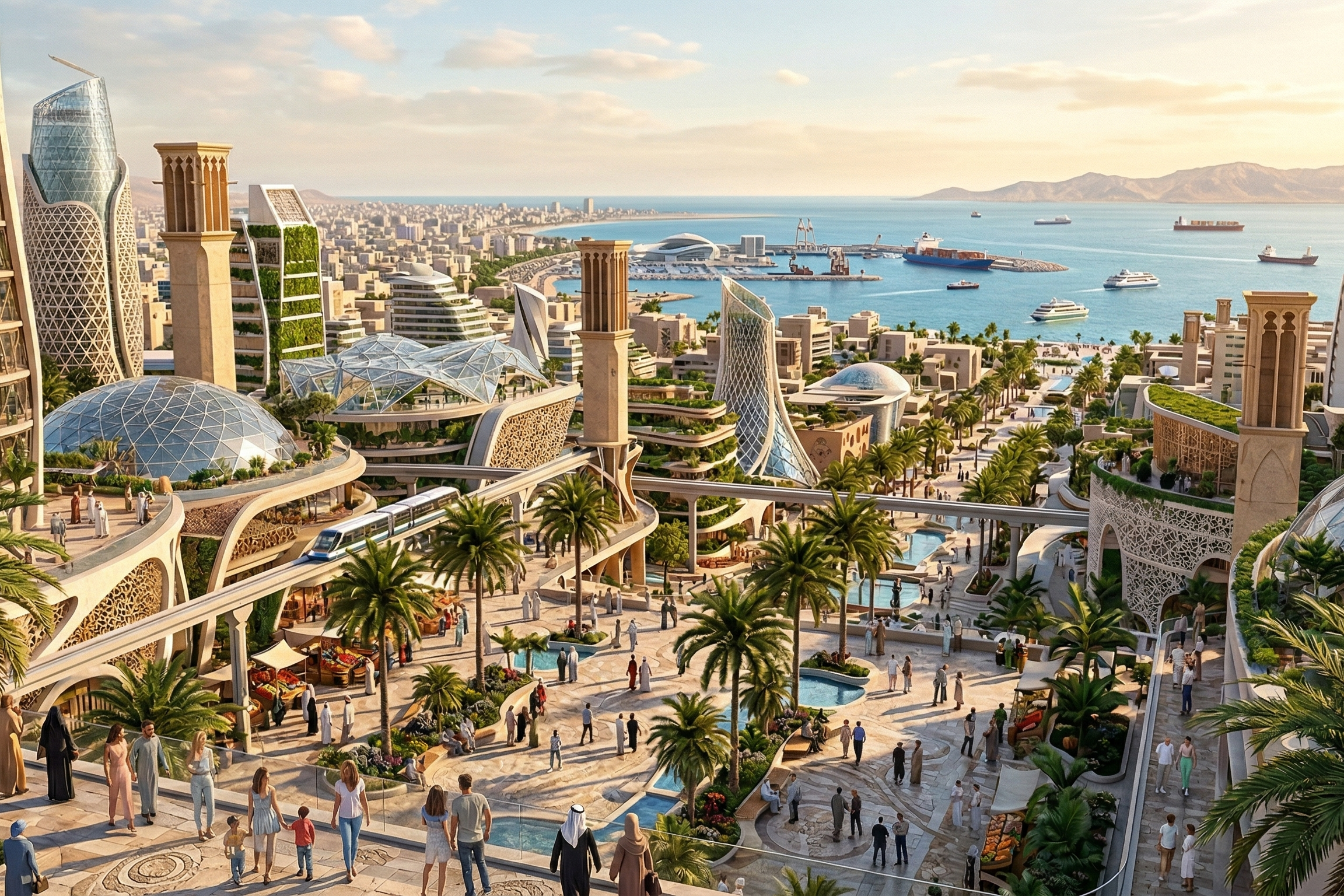
Political Capital
Bandar Abbas serves as the political capital, chosen for its geographic centrality to the Gulf region, its role as Iran’s primary maritime gateway (Shahid Rajaee Port handles over 85% of Iran’s container traffic), and its position at the heart of the Perso-Arabian Ring and the Hormuz Tunnel. Tehran remains the country’s largest city and its cultural and economic capital, with a metropolitan population exceeding 15 million.
See also: Satrapy System · Seven Principles · Liquid Democracy · Open-Source Governance · Bandar Abbas · Middle Eastern Union · Strait of Hormuz
Flag
Official name
United Satrapy of Iran
Government
Federal democratic republic
Capital
Bandar Abbas (political)
Tehran (cultural/economic)
Population
~90 million
Area
~1.65 million km²
Satrapies
14
Currency
Gulf Rial (MEU)
Legislature
People’s Assembly (300 seats)
Satrapal Council (42 seats)
Executive
7-member Federal Executive Council