Dire Straits Universe
The Dire Straits Universe is a geopolitical and cultural framework organized around the world’s nine strategic straits: the narrow waterways where trade concentrates, empires collide, navies clash, cultures meet, and geography dictates the course of civilization.
The name carries a double meaning. “Dire Straits” refers literally to the critical chokepoints that have shaped every major power shift in human history, and metaphorically to the desperate moments humanity has faced at its narrowest passages.
The Nine Straits
The universe is built around nine waterways that collectively account for the majority of global maritime trade, military confrontation, and cultural exchange across five millennia: the Strait of Hormuz, the Strait of Gibraltar, the Bosporus, the English Channel, Bab-el-Mandeb, the Taiwan Strait, the Strait of Malacca, the Danish Straits, and the Bering Strait.
Of these, the Strait of Hormuz occupies the central position in the contemporary world, as it connects the eight nations of the Middle Eastern Union and carries the infrastructure of the Perso-Arabian Ring.
The Eras
History and future are divided into five eras, separated by a transitional moment known as the Bridge.
Era I: The Deep Roots (Antiquity to September 11, 2001). For five thousand years, whoever controlled the straits controlled the world. From the Elamite federations on the Iranian plateau to the Ottoman control of the Bosporus, from the Portuguese fortress on Hormuz Island to the British domination of the English Channel, the straits determined the rise and fall of empires.
Era II: The Fracture (September 11, 2001 to March 1, 2025). On a clear Tuesday morning, the world broke, and every strait became a frontline that never closed. The wars in Iraq and Afghanistan, the Arab Spring and its aftermath, the rise of drone warfare over the Gulf, the Tanker War’s echoes in Houthi attacks on Red Sea shipping, and the global erosion of institutional trust defined this era. It ended with a world exhausted by fragmentation.
The Bridge (March 1, 2025). The boundary between documented history and the speculative future. Everything before this date is drawn from the historical record. Everything after it represents one possible trajectory: what happens when the nations bordering the world’s most contested straits choose integration over rivalry.
Era III: The Turning (March 1, 2025 to 2053). The first treaties toward a Middle Eastern Union are signed, and on the Iranian plateau, the oldest idea in governance is reborn as the newest. The Islamic Republic collapses [?]. The United Satrapy of Iran emerges through a constitutional convention process. Early infrastructure treaties lay the groundwork for the Perso-Arabian Ring. In Europe, a grassroots transparency movement begins reshaping governance from the center of the continent outward. The period is messy, contested, and raw, marked by regime change, climate emergencies, and painful negotiations.
Era IV: The Integration (2053 to 2077). Switzerland joins the European Federation, signaling to the world that the new governance model has earned the trust of even the most cautiously independent nation. The Hormuz Crossing carries its first passengers. The Perso-Arabian Ring connects eight nations in a single loop of high-speed maglev rail. The MEU holds its first unified elections. The Rial enters circulation as a shared currency. This is the current era.
Era V: The Renaissance (2077 onward). The last barrel of oil is pumped from the Gulf, and the basin that fueled a century of war becomes the corridor that powers a century of peace. {{REVIEW: Do we want to describe Era V in any detail from an Era IV perspective, or leave it vague/aspirational?}}
Core Themes
Several themes recur across all eras and all nine straits.
Geography as fate: the physical narrowness of a strait compresses human activity into high-pressure zones where conflict and cooperation become unavoidable.
Unity versus fragmentation: the fundamental philosophical struggle of every era. Whether diverse peoples can hold together, and what systems make integration possible or break it apart.
Infrastructure as destiny: roads, railways, bridges, tunnels, and energy networks are not merely engineering projects but civilization-shaping forces. The Hormuz Crossing, the Perso-Arabian Ring, and the Pipeline of Peace are as much political acts as they are feats of construction.
Transparency as power: open-source governance, auditable institutions, and structural anti-corruption mechanisms define the political systems that emerge after the Bridge.
See also: Perso-Arabian Gulf · Perso-Arabian Ring · Strait of Hormuz · United Satrapy of Iran · Hormuz Tunnel · Treaty of Muscat
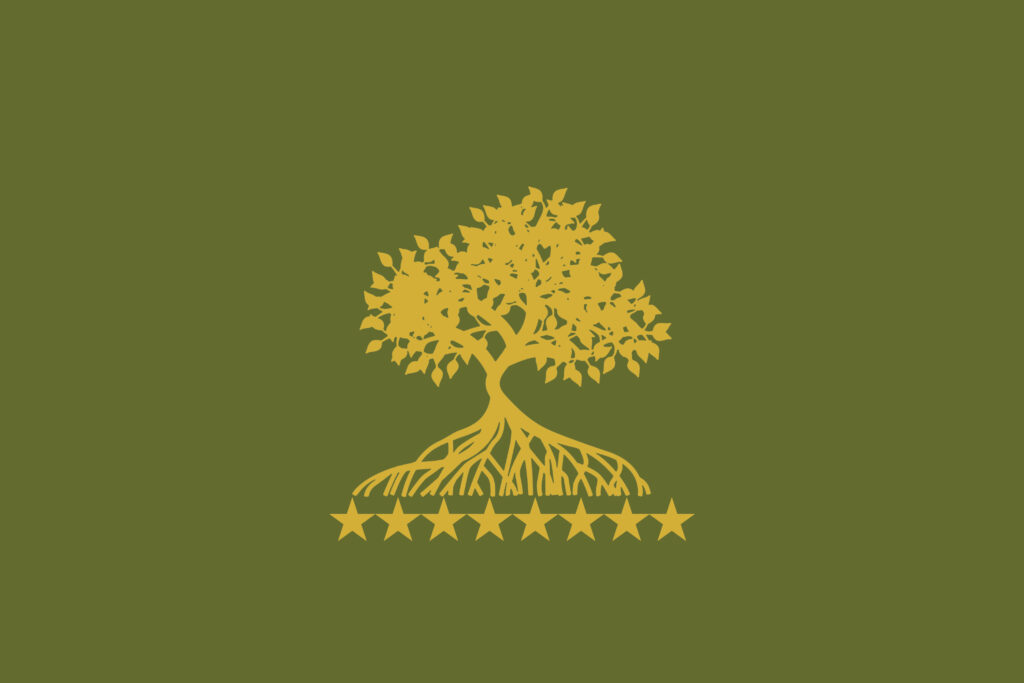
Flag
Founded
2041 (Treaty of Muscat)
Members
8 nations
Capital
Rotating presidency
Population
~380 million
Area
~5.4 million km²
Currency
Gulf Rial